For modern professionals, mastering business travel transit is an essential skill that separates a stressful journey from a productive extension of the office. When your itinerary requires a tight connection or an extended multi-hour layover—perhaps departing from Baku's Heydar Aliyev International Airport toward major European or Asian hubs—how you utilize those interstitial hours matters immensely. Instead of treating transit as wasted time, smart corporate travelers turn airport terminals, lounges, and transit hotels into mobile workspaces. Whether you need to catch up on urgent emails, prepare for an upcoming pitch, or check the latest flight search updates for schedule adjustments, structuring your layover requires deliberate planning and the right habits.
Pre-Travel Planning for Seamless Business Travel Transit
The foundation of a productive transit experience is laid long before you step foot in an airport. When booking corporate itineraries, look closely at layover durations. Anything under 60 minutes leaves you vulnerable to delays, while layovers exceeding four hours demand strategic mitigation. Selecting the right hub airports makes a massive difference; airports renowned for world-class business infrastructure, efficient security screening, and quiet zones will drastically improve your output. Furthermore, always verify baggage policies and terminal transfer rules ahead of time. If your luggage is checked through to your final destination, you are free to move between terminals unencumbered, carrying only your professional essentials.
Another crucial element of planning is securing necessary digital and physical accessories. Pack your power banks, universal adapters, noise-cancelling headphones, and secure laptops in your personal item, never in checked baggage. If your journey involves multiple time zones, map out your work schedule before departure so you know exactly which hours during your transit alignment require active communication with your team back at the headquarters and which hours are suited for deep, uninterrupted focus work.
Choosing the Right Environment: Lounges vs. Co-Working Hubs
The quality of your workspace during business travel transit dictates your focus and output. While airline lounges are the traditional sanctuary for business flyers, major international hubs now feature dedicated co-working pods, quiet cabins, and airport hotels equipped with day-use meeting rooms. If your layover is longer than three hours, investing in lounge access—either through elite frequent flyer status, business class ticketing, or credit card perks—pays for itself in productivity, Wi-Fi reliability, and peace of mind.

When assessing your environment, prioritize three main factors: secure, high-speed Wi-Fi, ergonomic seating, and acoustic privacy. Public terminal seating can be loud and distracting, making deep work nearly impossible. If a lounge is unavailable, seek out designated quiet zones or airport business centers. For longer transits lasting upwards of six hours, booking an airport hotel room or a sleep cabin inside the terminal is often the ultimate investment, allowing you to take a refreshing shower, change clothes, and tackle high-stakes tasks in absolute comfort.
Digital Security Protocols on the Move
Working during business travel transit exposes your corporate data to unique vulnerabilities. Public airport Wi-Fi networks, while convenient, are notoriously insecure and prime targets for interception. Never conduct sensitive corporate transactions, financial reviews, or proprietary data analysis without activating a reliable Virtual Private Network (VPN). Ensure your company-issued devices have up-to-date firewalls, encrypted hard drives, and multi-factor authentication enabled for all cloud platforms.
Beyond network security, consider physical privacy in transit spaces. Eavesdropping and 'shoulder surfing' are real risks in crowded airport terminals and busy lounges. Utilize a privacy screen filter for your laptop to block peripheral viewing of confidential spreadsheets, financial reports, or client communications. When taking confidential video calls, opt for a secure corner or an enclosed phone booth workspace rather than broadcasting sensitive corporate strategy in the open boarding gate seating area.
Managing Energy and Time Zones During Layovers
Cross-border business travel transit frequently induces cognitive fatigue, jet lag, and decision exhaustion. To maintain high performance, segment your layover time intentionally. Match your tasks to your current mental energy levels. If you are crossing multiple time zones, use the transit window to either catch up on sleep or align your biological clock with your destination's local time. Heavy analytical work should be reserved for periods of high alertness, while lighter administrative chores, such as organizing folders or clearing routine emails, fit well during low-energy dips.
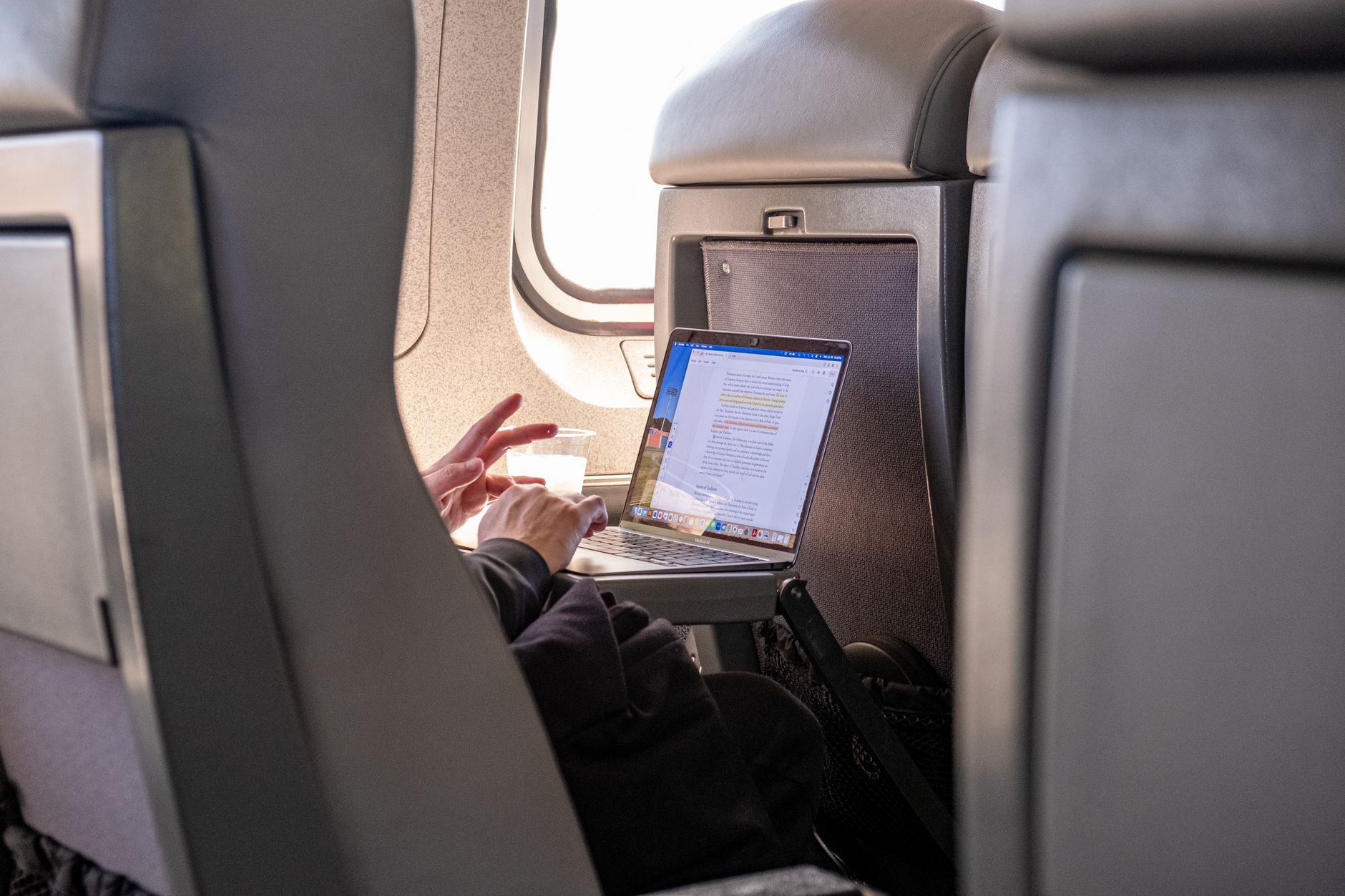
Do not overlook physical well-being. Sitting for prolonged periods during flights followed by hours at an airport desk restricts circulation and causes stiffness. Incorporate short walking breaks throughout the terminal every hour, practice light stretching, and stay adequately hydrated. Avoid excessive caffeine and sugary snacks, which lead to energy crashes later in your journey. Balancing cognitive output with physical recovery ensures that when you finally arrive at your destination, you step off the plane sharp, energized, and ready to close deals.
Leveraging Digital Tools and Corporate Platforms
Efficiency in business travel transit heavily relies on the digital tools you keep at your fingertips. Cloud-based project management suites, offline document editing capabilities, and real-time itinerary tracking applications keep you synced with your team regardless of your physical coordinates. Make sure critical files are downloaded locally so you can continue working seamlessly even if airport Wi-Fi drops unexpectedly or you find yourself boarding a remote aircraft stand without connectivity.
As a corporate traveler, streamlining your travel arrangements through professional channels saves valuable administrative hours. Partnering with a dedicated corporate travel agency allows businesses to optimize multi-stop routes, manage preferred airline and hotel networks, and integrate loyalty programs effortlessly. Whether you are managing complex corporate itineraries, exploring team incentive options, or booking tailored corporate getaways, working with an experienced agency ensures every logistical detail is handled. To discover how our corporate management services can elevate your business travel framework, learn more about Travellab.
Maximizing Productivity Without Burning Out
The ultimate trap of business travel transit is the pressure to remain 100% productive every single minute. While optimizing layovers is valuable, trying to push through exhaustion often results in substandard work and burnout upon arrival. Give yourself permission to disconnect when your brain demands it. Sometimes, the most strategic use of a two-hour connection is stepping away from the screen, enjoying a quiet meal, and mentally resetting before the next leg of your flight.
Establish clear boundaries for what constitutes a successful transit session. If you accomplish one major objective—such as finalizing a quarterly report, drafting a critical proposal, or clearing your priority inbox—consider the layover a resounding success. Keep your travel logistics streamlined, stay flexible when unforeseen flight schedule shifts occur, and view transit not as a logistical hurdle, but as a flexible space to move your business forward. For comprehensive support with your upcoming corporate travel needs, our agency stands ready to assist you every step of the way.